
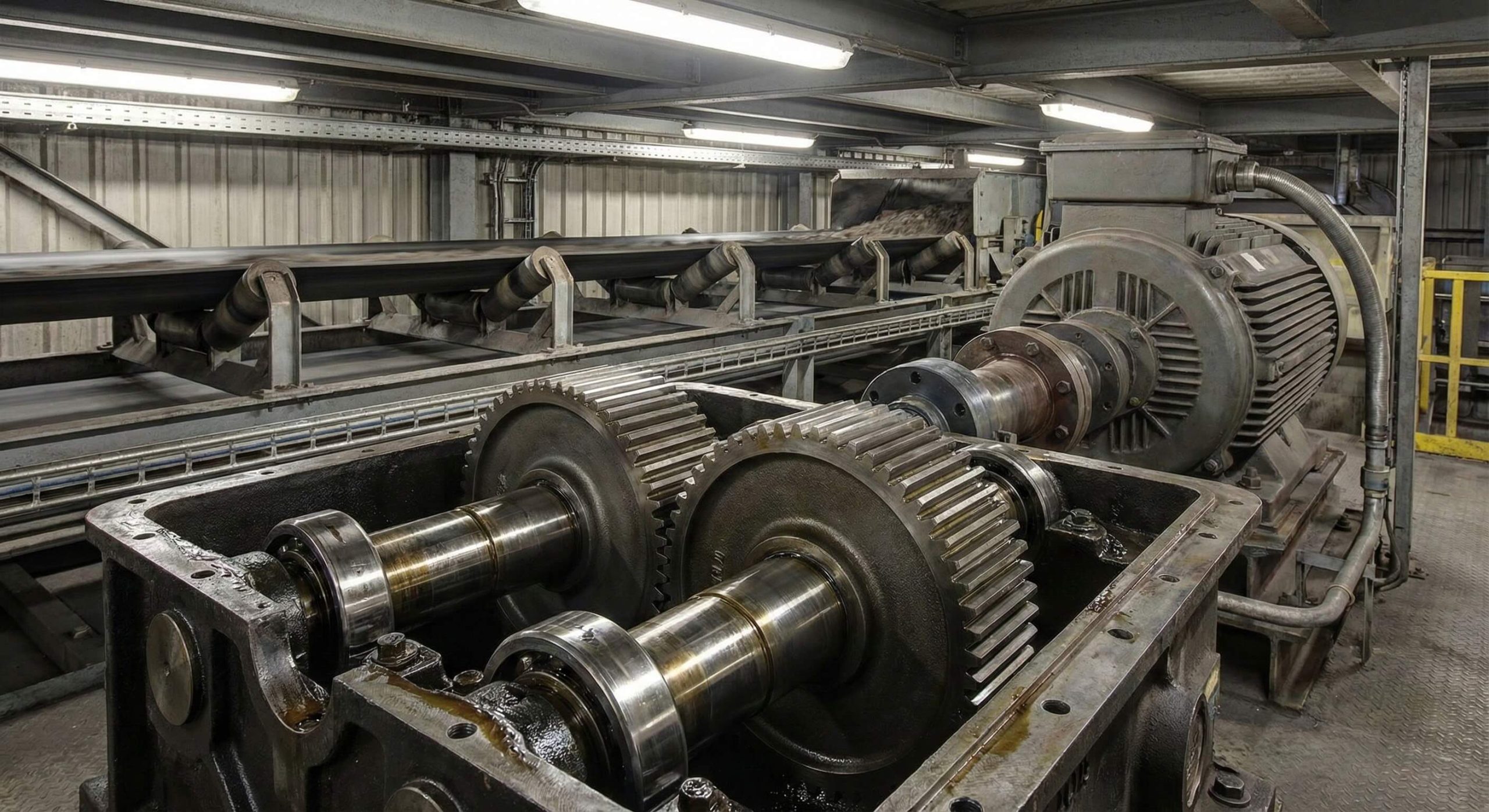
A spur gear is a mechanical component with straight teeth used to transmit torque and motion between two parallel shafts. You might find that standard transmission systems often suffer from power loss or excessive noise during high-torque operations. This mechanical friction creates heat that wears down your equipment, leading to costly repairs and downtime. High-quality uses of spur gear effectively eliminate these concerns by providing constant speed ratios and maximum power transfer.
1. What are the primary industrial uses of spur gear?
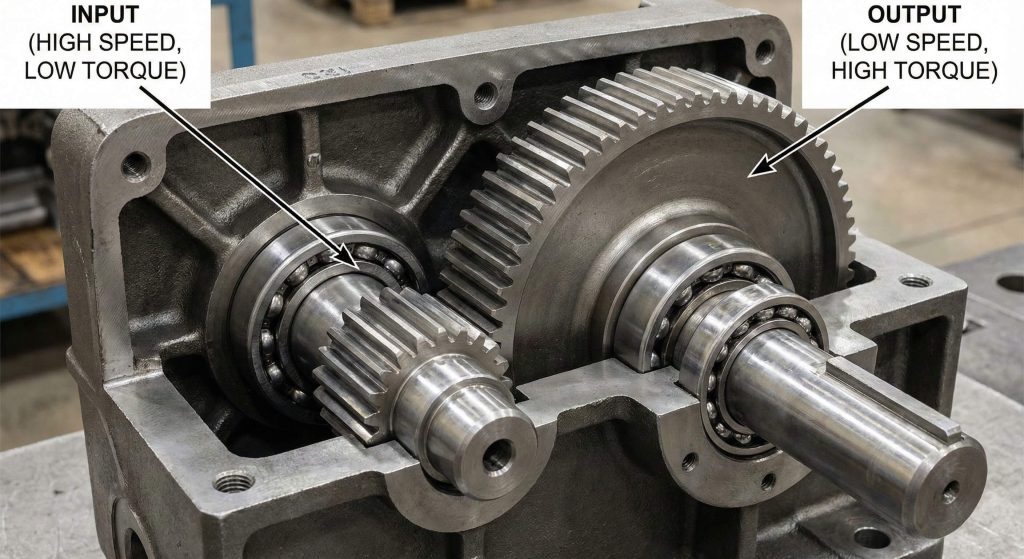
The primary industrial uses of spur gear involve providing reliable power transmission in heavy-duty gearboxes and factory machinery. You rely on these components to handle significant loads without creating axial thrust on your shaft bearings.
Speed reduction in gearboxes
Speed reduction is achieved by meshing a smaller pinion with a larger spur gear to increase output torque. This configuration allows you to drive heavy industrial rollers or mixers using smaller, high-speed motors.
Think about it…
- Linear tooth engagement ensures constant velocity.
- Simple mounting requirements reduce installation costs.
- High mechanical efficiency prevents energy waste.
- You gain predictable performance under variable loads.
High torque applications
High torque applications utilize the thick tooth profile of spur gears to prevent mechanical shearing under pressure. These gears are the backbone of the heavy equipment you see in mining and construction sectors.
But wait, there is more…
- Broad face widths distribute the load.
- Hardened steel materials resist surface pitting.
- Straight teeth eliminate the need for thrust washers.
- Maintenance is simplified due to accessible designs.
Key Takeaway: You should prioritize spur gears for industrial gearboxes to maximize torque while minimizing axial stress.
| Industrial Benefit | Value Proposition |
|---|---|
| Load Distribution | Uniform Across Teeth |
| Axial Thrust | Negligible |
| Maintenance | High Accessibility |
The absence of sliding friction between the teeth ensures that your industrial equipment operates at peak efficiency for longer periods.
2. How does efficiency define the uses of spur gear?
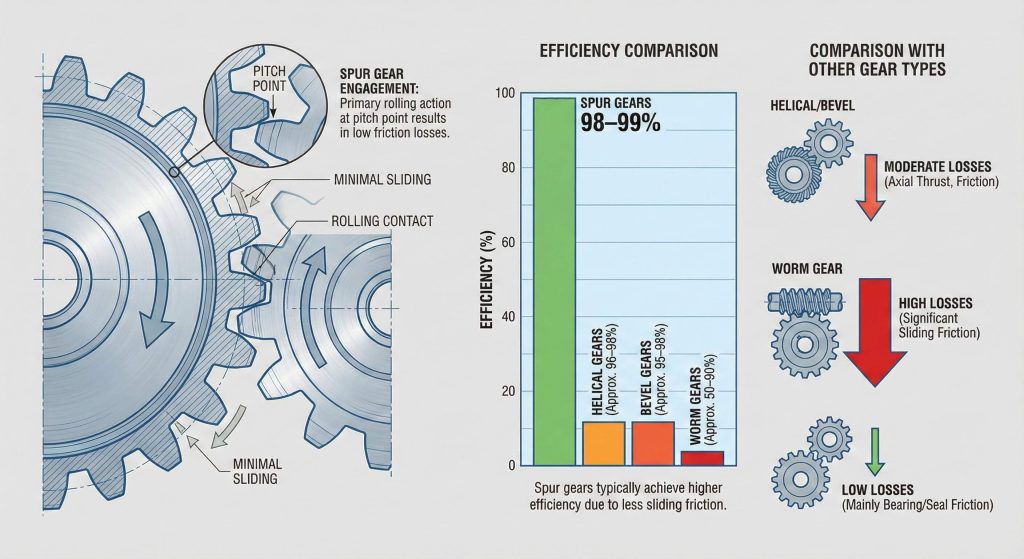
Efficiency defines the uses of spur gear because their straight-tooth design typically achieves a power transmission rate between 98% and 99%. This makes them the most efficient gear type available for your parallel shaft configurations.
Minimizing energy loss
Minimizing energy loss is possible because spur gears do not produce any sideways forces during the meshing process. You will notice that almost all the input energy from your motor is converted directly into useful rotational work.
It gets better…
- Reduced heat generation protects your lubricants.
- Low friction contact saves on electricity costs.
- You can downsize your motors due to high efficiency.
- Direct power paths simplify your drive train.
Parallel shaft transmission
Parallel shaft transmission is the most common use case where you need to bridge the gap between two side-by-side axes. The straight-line contact of the teeth ensures that the shafts remain perfectly synchronized.
The truth is…
- No slippage occurs between the driving and driven gear.
- You maintain a positive drive ratio at all times.
- Shaft alignment is easier to verify visually.
- Multi-gear trains are easy to build.
Key Takeaway: When you need to transmit power with virtually zero loss, the spur gear is your most effective mechanical tool.
| Transmission Metric | Efficiency Rating |
|---|---|
| Power Transfer | 99% |
| Slip Resistance | Absolute |
| Thermal Stability | Excellent |
High efficiency allows you to run your systems for extended hours without the risk of thermal expansion affecting your gear tolerances.
3. Which machinery highlights the uses of spur gear?
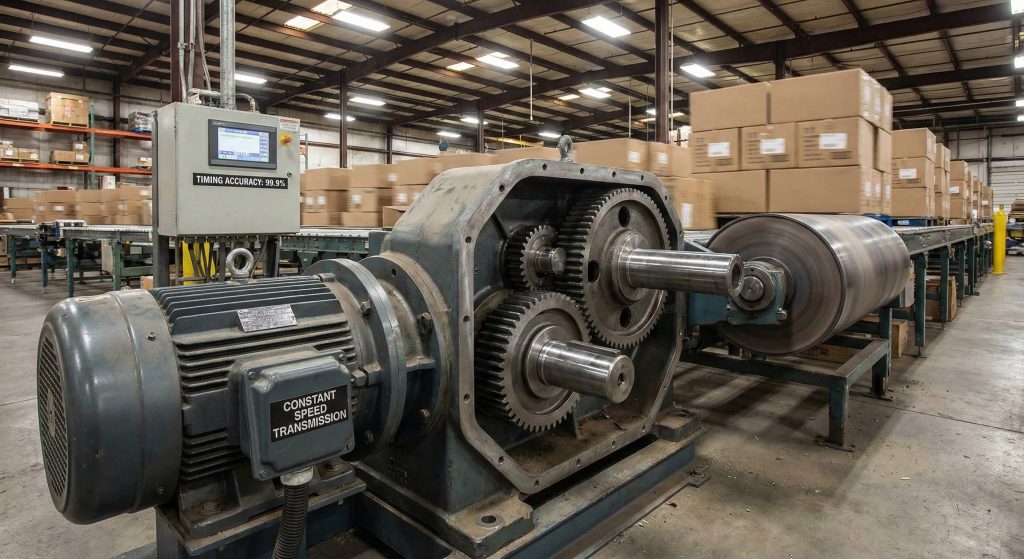
Machinery such as conveyor belts and milling tools highlight the uses of spur gear by utilizing their ability to maintain exact timing. You often see these gears in blog posts regarding industrial automation where precision is paramount.
Conveyor system drives
Conveyor system drives use spur gears to ensure that the belt moves at a perfectly consistent speed for sorting tasks. This prevents items from piling up or falling off your automated packaging lines.
Look closely…
- Exact gear ratios provide timing control.
- High-torque startup moves heavy pallet loads.
- You can easily swap gears to change belt speeds.
- Rugged designs survive dusty warehouse environments.
Milling machine components
Milling machine components rely on the uses of spur gear to move the work table along the x and y axes. This allows you to achieve the sub-millimeter accuracy required for professional metal fabrication.
Imagine this…
- Rigid tooth contact prevents tool chatter.
- High repeatability for identical part production.
- You get smooth finishes on your milled surfaces.
- Long-term reliability reduces your calibration needs.
Key Takeaway: Heavy machinery benefits from the inherent rigidity and non-slip nature of the spur gear tooth profile.
| Machinery Type | Primary Function |
|---|---|
| Conveyor | Constant Velocity |
| Milling Tool | Precise Positioning |
| Steel Mill | Heavy Load Transfer |
Utilizing a high-quality spur gear ensures that your machining tolerances remain consistent over the life of the equipment.
4. How do materials influence the uses of spur gear?
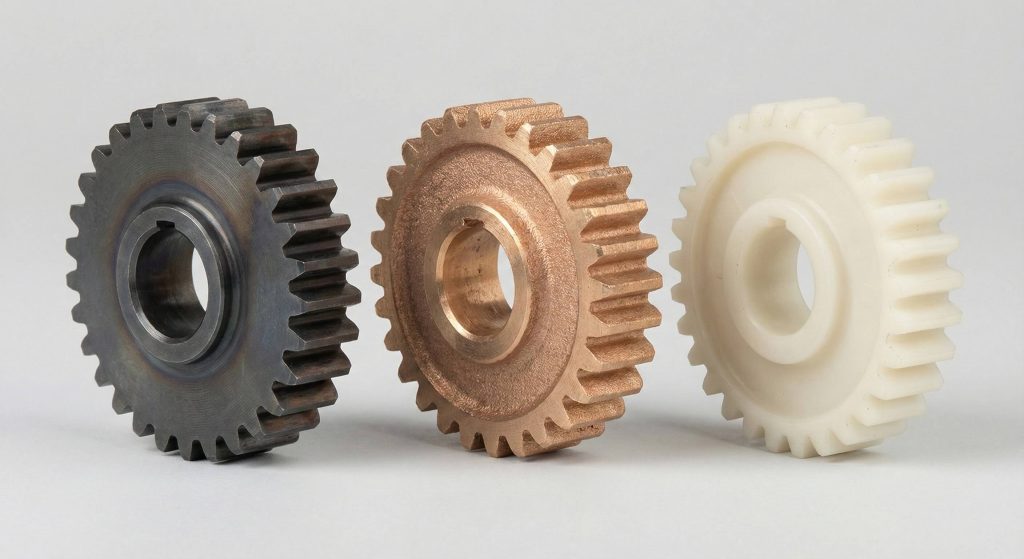
Steel for load capacity
Steel is the standard material for the uses of spur gear in automotive and manufacturing settings where strength is the priority. You can choose from various carbon grades or stainless steel to prevent corrosion in your drive systems.
The best part…
- Case-hardening increases your gear’s wear life.
- High fatigue strength prevents tooth breakage.
- Steel gears can be ground for higher precision.
- You can transmit hundreds of horsepower safely.
Plastic for noise reduction
Plastic materials like nylon or acetal are used when your application requires a quiet, lightweight transmission solution. These gears are often found in the office printers or hospital equipment you use every day.
Understand this…
- Polymers offer natural self-lubrication.
- You save significant weight in portable devices.
- Operation noise is dampened by the material.
- Manufacturing costs are lower for molded plastic.
Key Takeaway: You must match your gear material to your specific environment to balance strength against operational volume.
| Material Type | Best Use Case |
|---|---|
| Hardened Steel | Heavy Industrial Gearboxes |
| Brass / Bronze | Low Speed, Low Friction |
| Nylon / POM | Quiet Home Electronics |
By selecting the correct material, you ensure that the gears won’t fail prematurely due to environmental stress or overload.
5. Why are pumps among the best uses of spur gear?
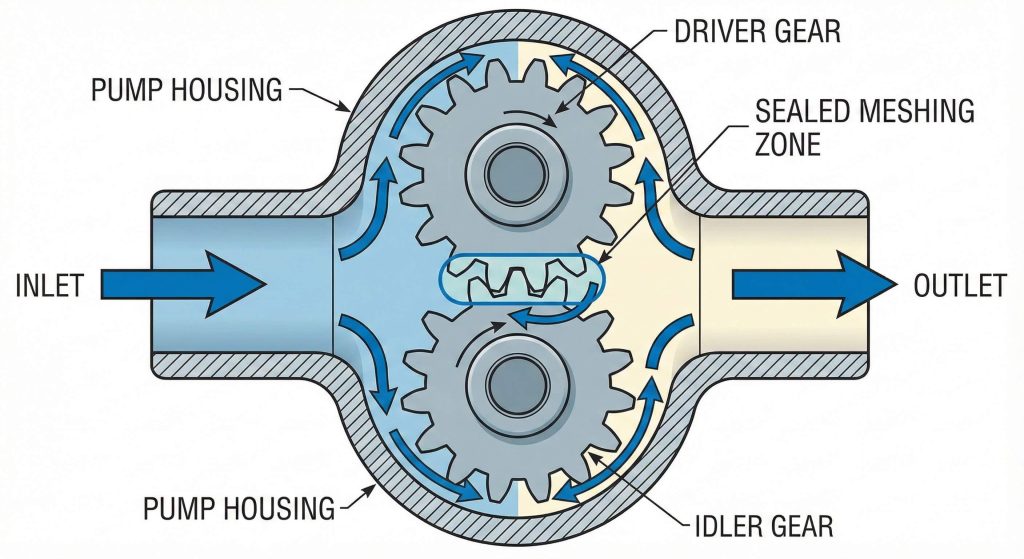
Pumps are among the best uses of spur gear because they can act as positive displacement devices to move thick fluids. You will find gear pumps in the hydraulic systems of every bulldozer and tractor on your local construction site.
Constant fluid displacement
Constant fluid displacement occurs when the fluid is trapped between the teeth and the housing as the gears rotate. This ensures that you get a steady flow of oil or fuel even when the system pressure increases.
The truth is…
- Volumetric efficiency remains very high.
- You can move high-viscosity liquids easily.
- The pump flow is proportional to its speed.
- Bi-directional operation is possible with spur teeth.
Hydraulic system reliability
Hydraulic system reliability depends on the spur gears to generate the massive pressure needed to lift heavy loads. The simple design of the spur tooth makes it easier for you to maintain these critical pump components.
Believe it or not…
- Few moving parts reduce potential leak points.
- Spur gears resist cavitation better than others.
- You get consistent performance in cold weather.
- Replacement parts are widely available and affordable.
Key Takeaway: Gear pumps utilize the simple geometry of spur teeth to provide reliable, high-pressure fluid power.
| Pump Feature | Performance Impact |
|---|---|
| Gear Meshing | Creates Vacuum for Suction |
| Tooth Seal | Prevents Pressure Backflow |
| Shaft Speed | Directly Controls Flow Rate |
Your hydraulic systems will last longer if you use high-precision spur gears that minimize internal fluid slippage.
6. Do home appliances optimize the uses of spur gear?
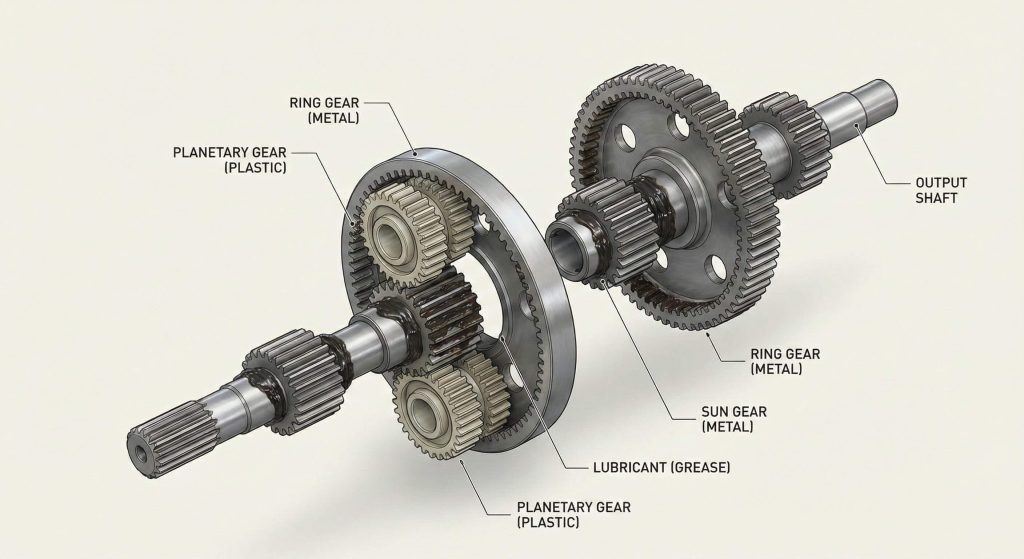
Washing machine transmissions
Washing machine transmissions rely on spur gears to convert the high-speed motor rotation into the slow, powerful agitation needed to clean clothes. These gears allow you to wash heavy blankets without straining the electrical motor.
Listen closely…
- Heavy-duty grease ensures long-term life.
- Impact resistance handles the weight of wet laundry.
- You get reliable directional changes during cycles.
- Simple gears lower the appliance’s overall cost.
Kitchen blender mechanisms
Kitchen blender mechanisms use small spur gear sets to ensure that the blades spin at the exact RPM needed for chopping or pureeing. These gears are designed to withstand the sudden resistance of frozen fruit or ice cubes.
Think about it…
- High-speed durability prevents tooth wear.
- Compact layouts fit inside handheld models.
- You get consistent torque for thick mixtures.
- Cleaning is easier with enclosed gear housings.
Key Takeaway: Consumer electronics depend on spur gears to provide high torque in small, consumer-friendly footprints.
| Appliance Component | Primary Material |
|---|---|
| Timer Motor | Plastic (POM) |
| Mixer Gear | Sintered Metal |
| Agitator | Hardened Steel |
The simplicity of these gears makes your household appliances more affordable and easier for technicians to repair.
7. What defines precision in the uses of spur gear?
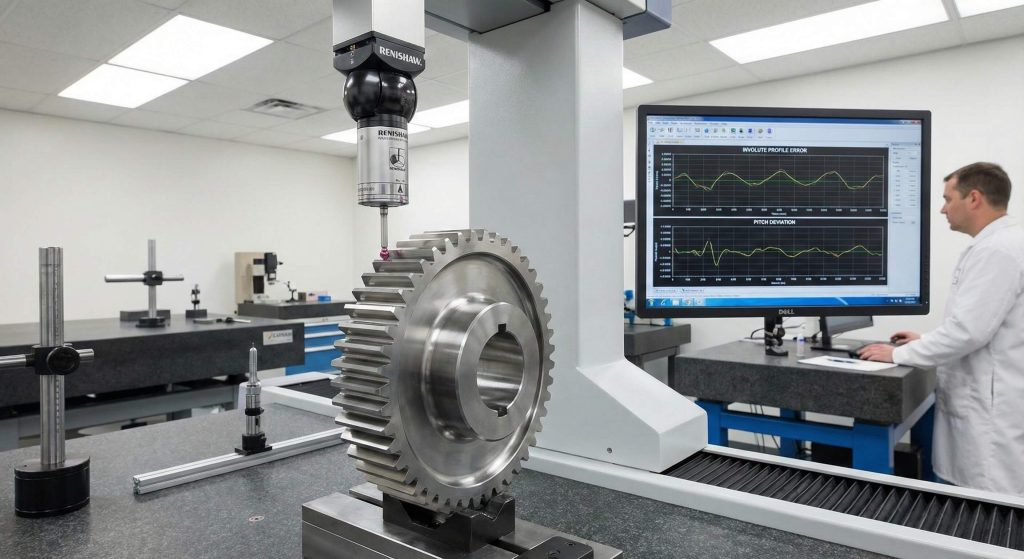
Precision in the uses of spur gear is defined by the “module” size and the accuracy of the involute tooth profile. You can check our about page to understand how GearAide prioritizes these technical specifications for high-accuracy systems.
Mechanical clock accuracy
Mechanical clock accuracy is entirely dependent on the pitch diameter of the spur gears within the movement. You need these gears to align perfectly to ensure that every second is measured exactly without any mechanical lag.
Look…
- Ground tooth surfaces reduce friction errors.
- Microscopic modules allow for complex timing.
- You get centuries of life with proper metal choice.
- Backlash is minimized for “ticking” precision.
Medical device sensor drives
Medical device sensor drives utilize high-precision spur gears to adjust the positioning of surgical lasers and cameras. You rely on the zero-slip nature of these gears to keep patient safety at its highest level.
But wait, there is more…
- Sub-millimeter movements are highly repeatable.
- Lightweight materials prevent inertial overshoot.
- You can synchronize multiple robotic joints easily.
- Sterile-friendly alloys prevent biological contamination.
Key Takeaway: For instrumentation where every micron counts, the ground-tooth spur gear is the only reliable option.
| Precision Metric | Target Specification |
|---|---|
| Tooth Tolerance | < 0.005mm |
| Backlash | Near Zero |
| Concentricity | Absolute Center |
Maintaining high concentricity in your gears prevents the vibration that can ruin high-resolution sensor data.
8. How does high speed affect the uses of spur gear?
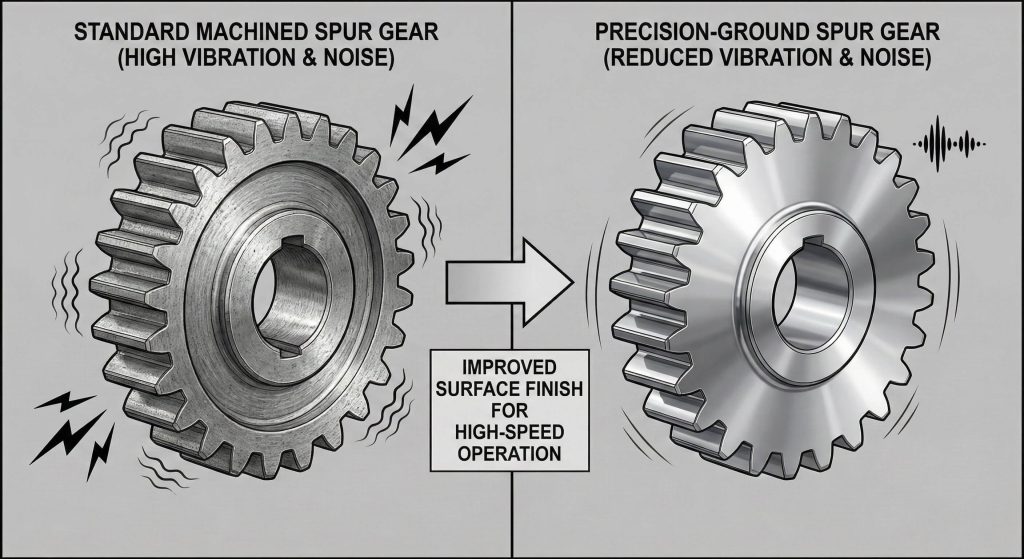
High speed affects the uses of spur gear by increasing the frequency of tooth impact, which can lead to noise if not managed. However, you still use them in high-speed applications like printing presses because they maintain perfect synchronization across multiple rollers.
Printing press roller timing
Printing press roller timing requires that every cylinder moves in perfect unison to ensure that ink is deposited correctly. You can print thousands of newspapers per hour because these gears never lose their relative position.
Understand this…
- Non-slip mesh prevents color blurring.
- High-speed timing avoids paper jams.
- You get consistent results across long print runs.
- Gear teeth are hardened to survive high RPMs.
Power plant steam turbines
Power plant steam turbines use spur gear sets within their governor systems to control the flow of steam. You rely on the uses of spur gear here because failure would result in a massive loss of electricity for your community.
The truth is…
- High rotational stability is a safety requirement.
- Gears operate in high-temperature environments.
- You get direct mechanical feedback for controls.
- Long maintenance intervals keep the lights on.
Key Takeaway: In high-speed settings, the rigid mesh of the spur gear prevents the timing drift that ruins production quality.
| High Speed Factor | Engineering Response |
|---|---|
| Noise | Ground Teeth & Synthetic Oil |
| Vibration | Balanced Gear Blank |
| Heat | High-Quality Lubrication |
Proper lubrication is the key to using spur gears at high speeds without experiencing excessive mechanical noise.
9. Can robotics evolve through the uses of spur gear?
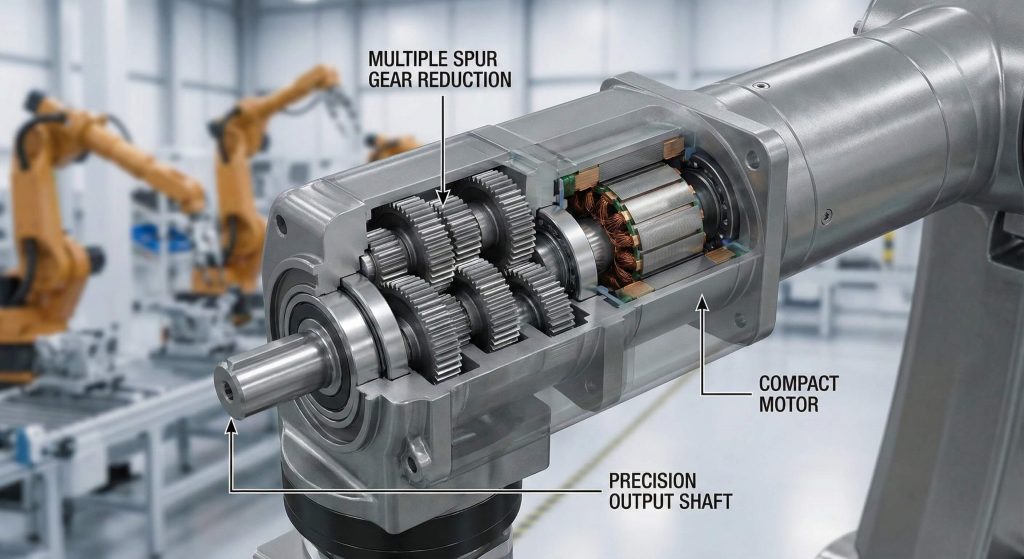
Robotics can evolve through the uses of spur gear by integrating them into planetary gear sets for high-density power at the joints. You can contact us today to discuss how custom gear geometries are improving the agility of modern robotic limbs.
Robotic arm joint motion
Robotic arm joint motion requires a high reduction ratio to allow a small motor to lift heavy industrial parts. You utilize spur gears in these compact gearboxes to provide the lifting power needed for automated car assembly.
It gets better…
- Multi-stage reduction fits in small robot wrists.
- High backlash control ensures accurate welding.
- You can use aluminum gears to save weight.
- Quick response times improve your cycle speed.
Automation assembly lines
Automation assembly lines use spur gears to drive the “pick and place” machines that sort your groceries or electronics. You rely on these gears to work 24/7 without needing the frequent recalibration required by belt-driven systems.
The best part…
- Continuous duty cycles are no problem for steel.
- You get exact positioning for delicate circuit boards.
- Modular gear sets allow for easy line expansion.
- Simple maintenance keeps your factory running.
Key Takeaway: Modern robotics relies on the absolute precision and torque density offered by multi-stage spur gear trains.
| Robotics Application | Gear Requirement |
|---|---|
| Heavy Lifting Arm | Hardened Alloy Steel |
| Delicate Picking | Low-Backlash Machining |
| Mobile Cobot | Lightweight Composite |
Integrating high-performance spur gears allows your robots to move faster and more accurately than ever before.
10. How does noise control limit the uses of spur gear?
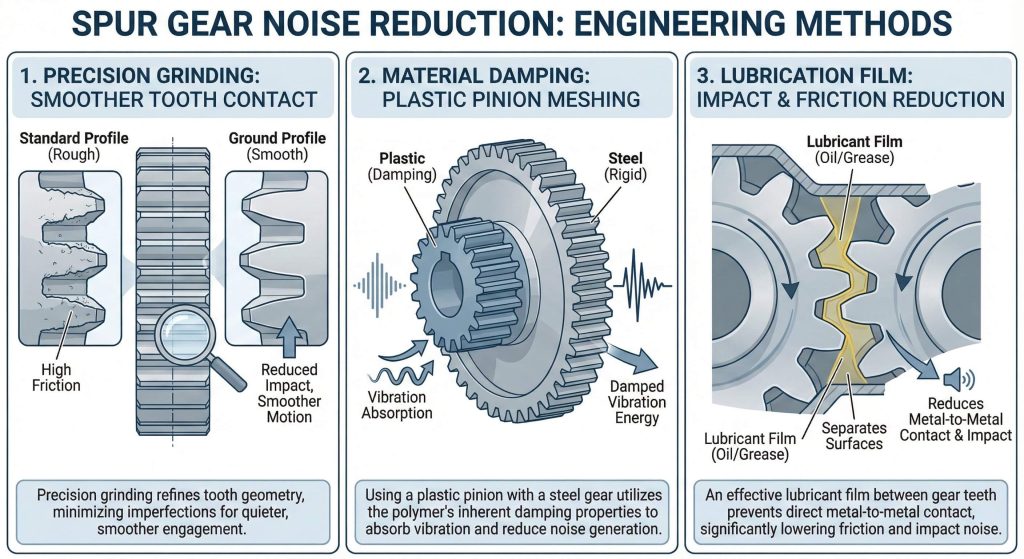
Noise control limits the uses of spur gear in extremely high-speed consumer goods, often pushing designers toward helical alternatives. However, you can mitigate this by using ground tooth profiles or dampening materials to keep the spur gear’s efficiency benefits.
Gear tooth tooth-profile grinding
Gear tooth profile grinding involves polishing the involute curve to a mirror finish to ensure the teeth roll rather than slide. You will find that this extra step significantly reduces the high-pitched whine common in lower-quality gears.
Look…
- Polished surfaces reduce acoustic vibrations.
- You get smoother power delivery at all speeds.
- Wear is reduced because friction is lower.
- Your gearboxes sound much more professional.
Lubrication for quiet operation
Lubrication for quiet operation involves using high-viscosity oils or synthetic greases that cushion the impact between the teeth. You can significantly expand the uses of spur gear in quiet environments by choosing the right lubricant for the job.
Imagine this…
- Grease acts as a sound-deadening barrier.
- You prevent the metal-on-metal “clack” at low speeds.
- Heat is carried away from the tooth contact zone.
- Your equipment runs cooler and quieter.
Key Takeaway: You can overcome the noise limitations of spur gears through precision finishing and advanced chemical lubrication.
| Noise Mitigation | Effectiveness |
|---|---|
| Profile Grinding | High |
| Plastic Pinion | Very High |
| Synthetic Oil | Medium |
Using a plastic pinion against a steel gear is a common trick you can use to enjoy high torque with low noise.
Summary and Recommendation
Spur gears remain the most widely used gear type because they offer unmatched efficiency and mechanical simplicity. You should choose spur gears whenever your shafts are parallel and you need a positive, high-torque drive without axial thrust. To ensure the best results, always verify your material requirements and tooth tolerances against your application’s speed and noise constraints.
At GearAide, our vision is to provide the precision engineering insights you need to build the next generation of industrial excellence. We are committed to technical transparency and the highest standards of component durability. If you are ready to optimize your motion control systems, please contact us today to find the perfect gear solution for your project.
FAQ
- Can I use spur gears for high-speed applications?
Absolutely, though you should ensure the teeth are precision-ground and well-lubricated to manage potential noise levels at high RPMs. - What’s the best way to reduce noise in a spur gear set?
The most effective method is to use a plastic gear meshing with a metal gear, as the different materials dampen the vibration frequency. - How do I know if my spur gears are wearing out?
You should listen for a change in pitch or grinding sounds, and visually inspect the teeth for “pitting” or surface deformation on the involute curve. - Can spur gears be used on non-parallel shafts?
No, spur gears are strictly designed for parallel shaft transmission; for perpendicular shafts, you would need to explore bevel or worm gears. - What’s the best material for high-heat gear environments?
You should look for case-hardened alloy steels or stainless steel, as they maintain their structural integrity better than polymers under thermal stress.