
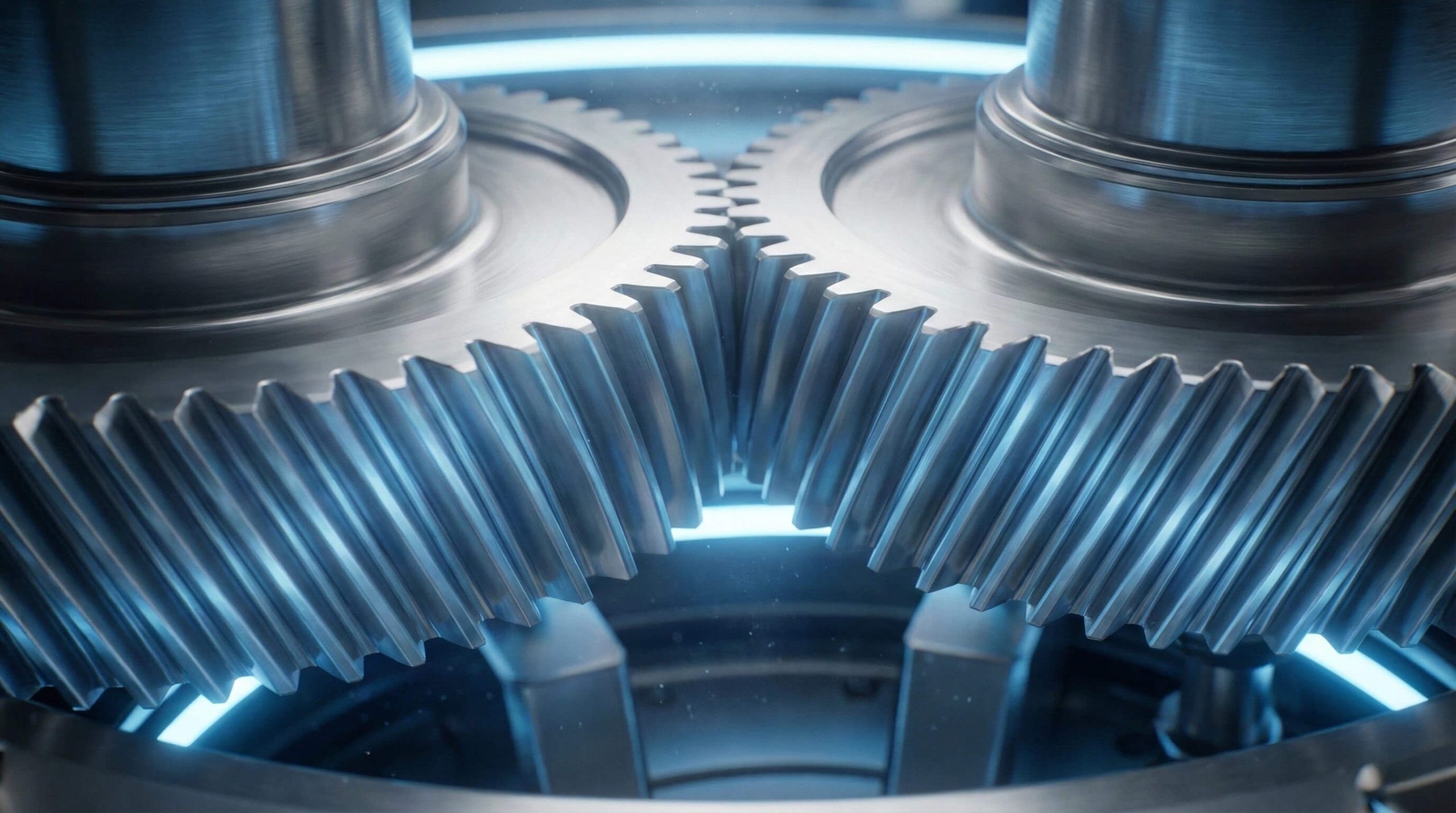
The primary difference between spur gears and helical gears is the tooth angle; spur gears have straight teeth for low-speed efficiency, while helical gears feature angled teeth for smooth, high-load transmission. High-speed industrial machinery often suffers from excessive vibration and noise levels that compromise precision. When your transmission system sounds like a rock crusher rather than a fine instrument, you are not just dealing with an annoyance; you are facing accelerated component wear and strict noise pollution compliance issues.
But here is the kicker. The root cause is often not the motor or the load, but the fundamental geometry of the gears chosen during the design phase. Replacing standard straight-cut gears with angled profile components eliminates these vibration issues at the source. At Yantong Tech, we have seen how understanding the advantages of helical gear over spur gear transforms unreliable gearboxes into smooth, high-load transmission powerhouses.
1. What Structural Traits Define the Advantages of Helical Gear Over Spur Gear?
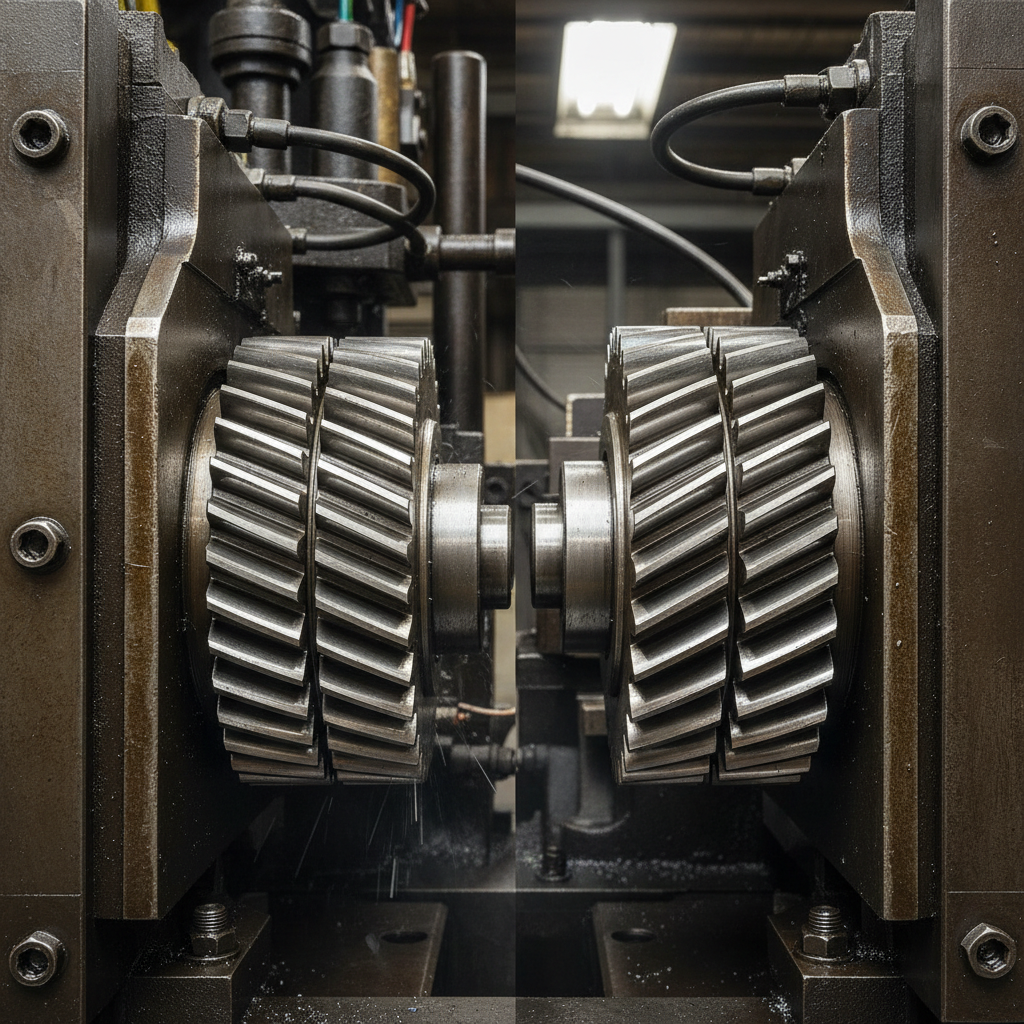
The fundamental difference lies in the tooth trace geometry relative to the axis of rotation. Spur gears feature teeth that are cut straight and parallel to the bore, meaning the entire tooth face engages simultaneously. The structural advantages of helical gear over spur gear stem from teeth cut at a specific helix angle, typically between 12 and 20 degrees.
This angled cut forces the teeth to engage gradually rather than instantaneously. You might be wondering. Why does this matter? It creates a sliding contact that distributes stress, contrasting sharply with the line-contact shock loading of straight-cut gears.
The Geometry Factor
The structural geometry creates a mechanical advantage in smoothness that straight cuts cannot physically replicate.
- Helix angles range from 15° to 30° standard.
- Engagement rolls across the face.
- Axis parallelism remains maintained.
Key Takeaways: Structure
The angled profile fundamentally changes how torque is delivered to the shaft.
| Feature | Spur Gear | Helical Gear |
|---|---|---|
| Tooth Trace | Parallel to Axis | Angled (Helix Angle) |
| Contact Type | Instant Line Contact | Gradual Point-to-Line |
| Engagement | Impact Loading | Sliding Engagement |
| Primary Benefit | Simplicity | Smoothness |
The helix angle transforms the transmission character from a series of impacts into a continuous, fluid transfer of torque.
2. How Does Noise Reduction Highlight the Advantages of Helical Gear Over Spur Gear?
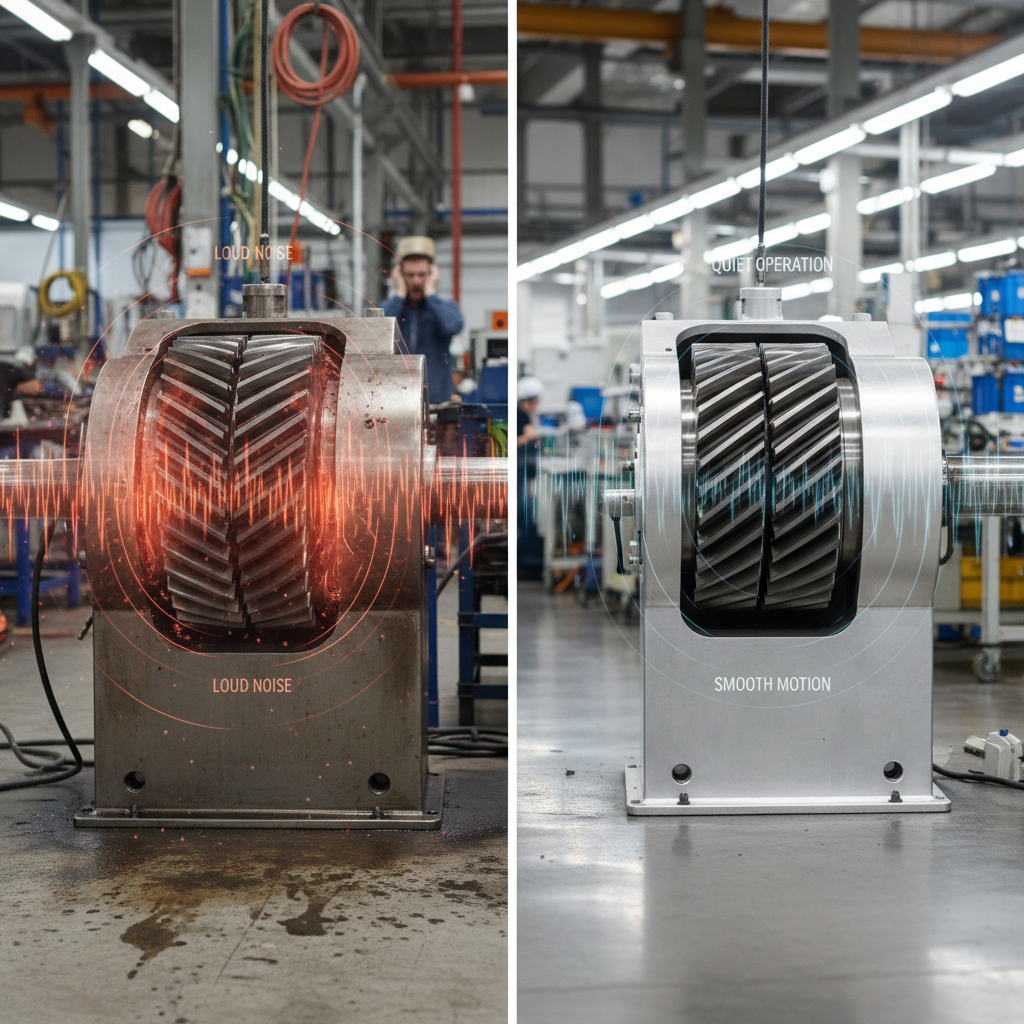
Noise in a gearbox is essentially wasted energy manifesting as sound waves, usually caused by the impact of teeth meshing. With spur gears, every time a tooth engages, it produces a distinct click that merges into a loud whine at high RPMs. Ready for the good part? The acoustic advantages of helical gear over spur gear are immediate, often lowering operating decibel levels by 10-15 dBA.
Because the teeth slide into mesh gradually, the “impact” is distributed over time, significantly dampening the acoustic signature. For sensitive environments requiring quiet operation, Helical Gears are the industry standard for compliance and operator comfort.
Acoustic Implications
Reducing decibels protects both the machinery and the operators.
- Eliminates high-pitch transmission whine.
- Reduces vibration transmitted to housing.
- Meets stricter OSHA noise standards.
Key Takeaways: Acoustics
Silence is a direct indicator of efficient, non-impact power transmission.
| Operational State | Spur Gear Noise (dBA) | Helical Gear Noise (dBA) |
|---|---|---|
| Idle Speed | 65-70 | 55-60 |
| Medium Load | 75-82 | 65-72 |
| Full Load @ 3000 RPM | 85-95 (Loud) | 75-80 (Acceptable) |
| Sound Character | Whine/Impact | Low Hum |
The gradual engagement dampens the sonic energy that would otherwise manifest as harmful vibration.
3. Why Do Heavy Loads Favor the Advantages of Helical Gear Over Spur Gear?
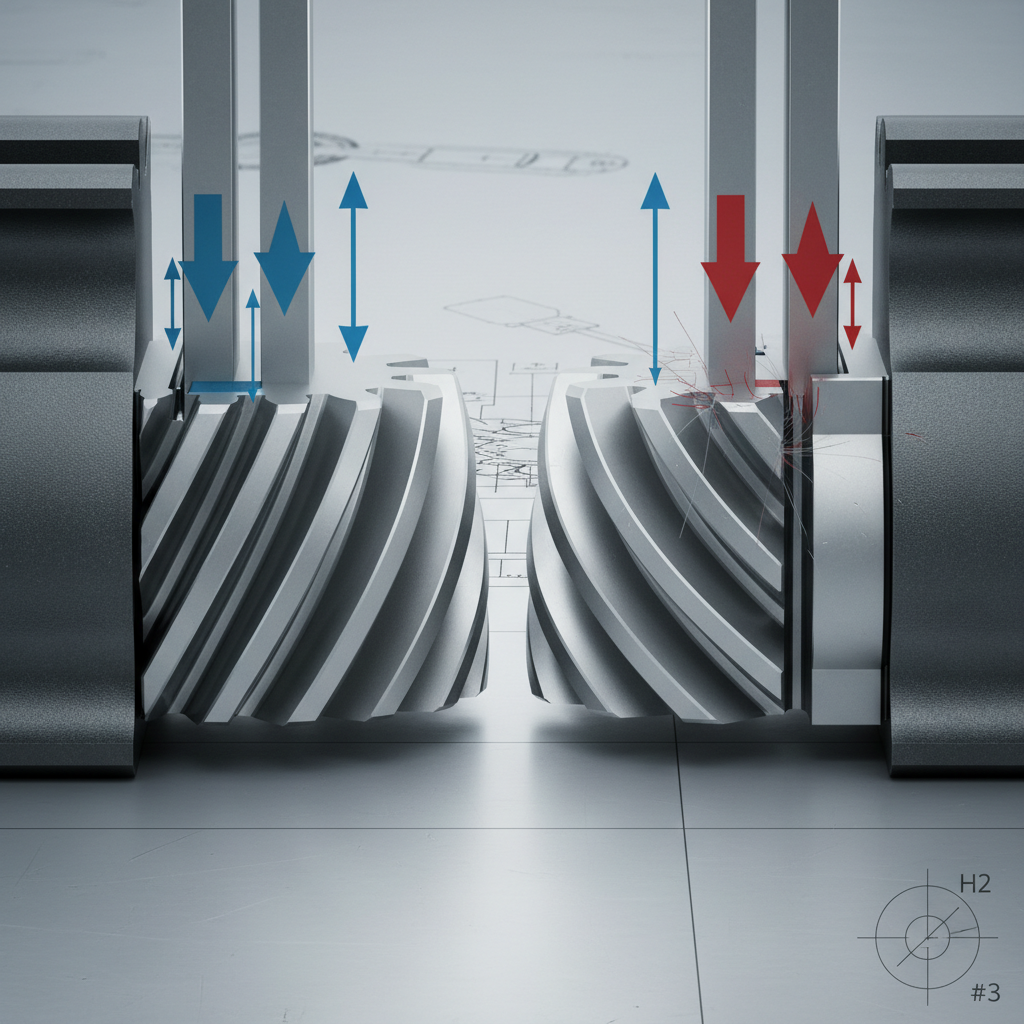
Torque transmission capability is directly related to the amount of physical material in contact at any given millisecond. In a spur gear setup, contact is limited to a single line, often with only one pair of teeth carrying the full load. But here is the kicker. The load-bearing advantages of helical gear over spur gear are undeniable because the angled tooth is physically longer than the gear face width.
This geometry allows for more teeth (typically 2.0 to 3.5) to share the load simultaneously. This distribution means the stress per square millimeter is significantly lower, allowing you to transmit higher horsepower without risking tooth breakage.
Capacity Factors
More metal in the mesh zone equals higher torque density.
- Surface area is increased by the helix angle.
- Stress is distributed across multiple teeth.
- Shock load resistance is nearly doubled.
Key Takeaways: Load Ratings
Helical profiles allow you to downsize the gearbox while maintaining torque capacity.
| Parameter | Spur Gear | Helical Gear |
|---|---|---|
| Teeth in Mesh | 1.2 – 1.6 | 2.0 – 3.5 |
| Stress Concentration | High (Single Line) | Moderate (Distributed) |
| Shock Resistance | Low | High |
| Torque Capacity | Baseline | +20% vs Baseline |
The distributed load profile prevents the localized stress fractures common in heavy-duty spur applications.
4. When Do High-Speed Requirements Dictate the Advantages of Helical Gear Over Spur Gear?
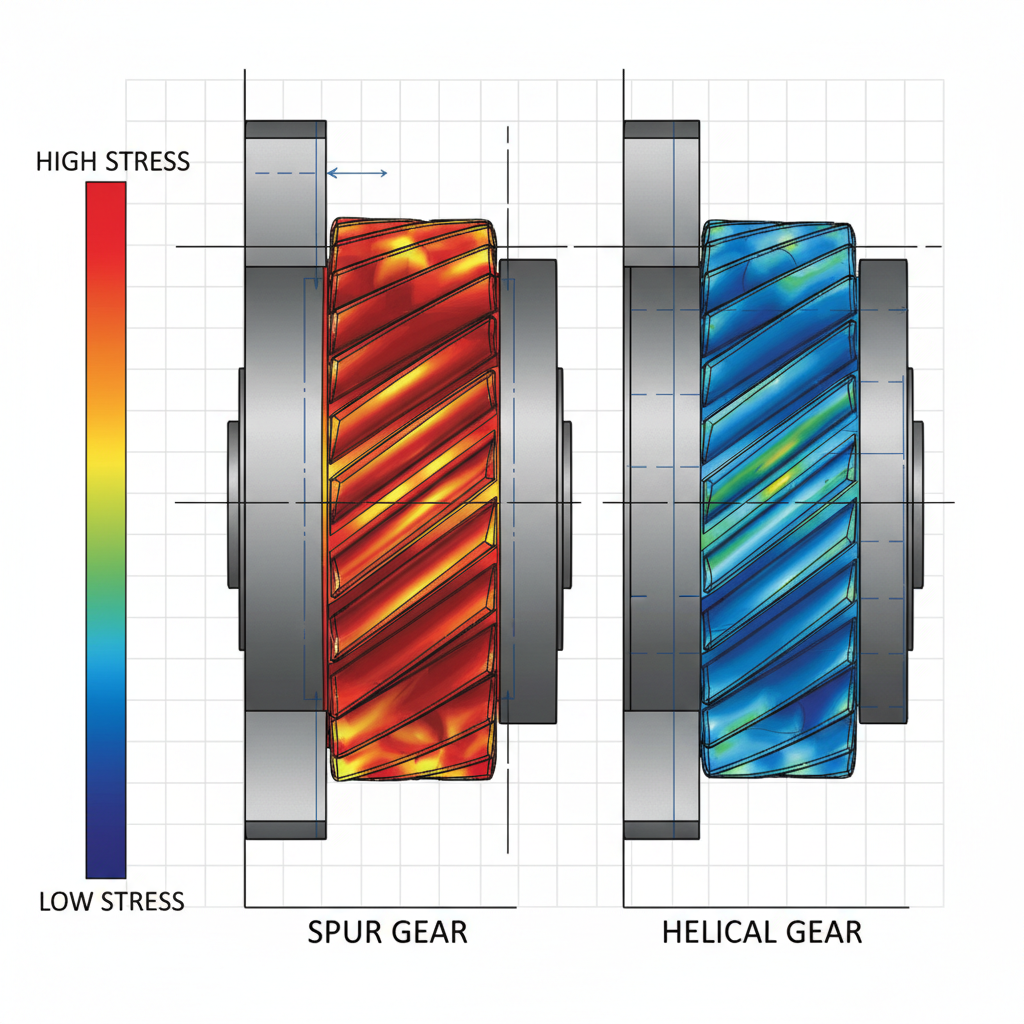
Velocity creates instability in standard mechanical components as rotational forces amplify minor imperfections. As rotational speed increases, the slight inaccuracies in tooth spacing on a spur gear are magnified, leading to dynamic instability. What is the real story? The high-speed advantages of helical gear over spur gear are mandatory once pitch line velocities exceed 20-25 meters per second.
The sliding entry of helical teeth prevents the “chatter” that destroys spur gears at high speeds. This stability allows components like Planetary Gears to operate at optimal efficiency without inducing resonant vibrations that could shatter drive shafts.
RPM Considerations
Speed is the enemy of impact-style engagement.
- Dynamic stability is maintained at high RPM.
- Resonance loops are avoided.
- Friction heat is managed through oil flow.
Key Takeaways: Speed Limits
If your application spins fast, the impact of spur gears becomes destructive.
| Application Type | Recommended Gear | Reason |
|---|---|---|
| Conveyor (<5 m/s) | Spur Gear | Cost-effective |
| Mixer/Agitator | Spur/Helical | Torque dependent |
| Vehicle Transmission | Helical | Speed + Noise |
| Turbine Shaft | Helical | Vibration risk |
Helical geometry is the only viable option for preserving system integrity at high rotational velocities.
5. How Does Contact Ratio Impact the Advantages of Helical Gear Over Spur Gear?
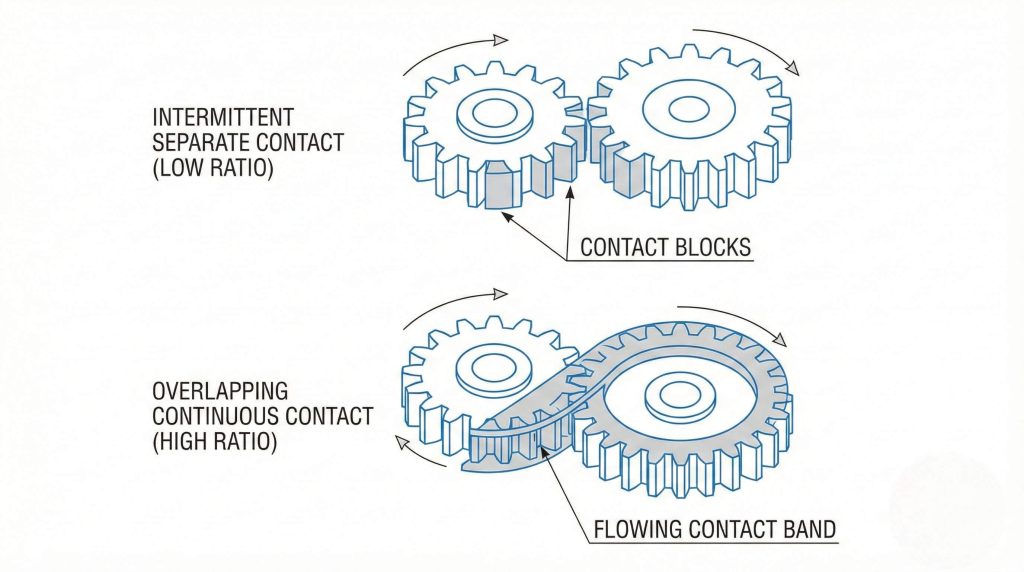
Engineers obsessed with precision look at one metric above all others: the contact ratio. This number represents the average number of teeth engaged at any moment, defining how smoothly power is handed off. Here is the deal. The advantages of helical gear over spur gear are mathematically proven here, as the helix angle introduces an “overlap ratio.”
While a spur gear struggles to maintain a ratio above 1.6, a well-designed helical gear easily achieves ratios above 2.0. This “High Contact Ratio” means there is never a millisecond where the load is handed off entirely; there is always an overlap.
Ratio Mechanics
Higher numbers mean smoother motion and less backlash.
- Transverse ratio plus overlap equals total contact.
- Axial overlap eliminates “stutter.”
- Smoothness is mathematically quantifiable.
Key Takeaways: Precision
A contact ratio above 2.0 ensures continuous, uninterrupted power flow.
| Metric | Spur Gear | Helical Gear |
|---|---|---|
| Transverse Contact | 1.2 – 1.8 | 1.2 – 1.8 |
| Overlap Ratio | 0.0 | 1.0 – 2.5 |
| Total Contact Ratio | 1.2 – 1.8 | 2.2 – 4.3 |
| Result | Intermittent Flow | Continuous Flow |
The overlap ratio is the secret ingredient that eliminates the microscopic pulsations found in spur drives.
6. Do Durability Factors Prove the Advantages of Helical Gear Over Spur Gear?
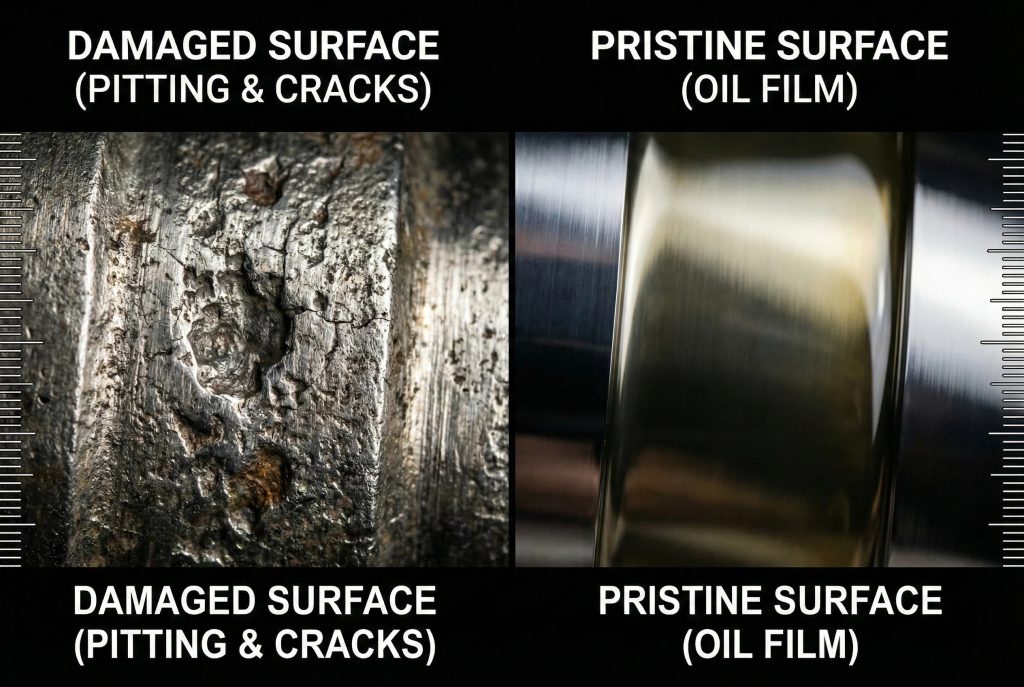
Equipment longevity is the ultimate ROI metric for procurement managers and maintenance teams. Because spur gears suffer from repeated impact loading, the tooth surfaces are prone to pitting and fatigue at the pitch line. This is where it gets interesting. The durability advantages of helical gear over spur gear extend to the metallurgy, provided lubrication is maintained.
The sliding action of helical gears helps distribute lubricant more effectively across the flank compared to the line-impact of spur gears. With proper treatment, components like Gear Racks utilizing helical cuts experience fewer emergency shutdowns and extended intervals between major overhauls.
Wear Analysis
How the tooth fails tells you which gear you need.
- Impact pitting is reduced.
- Lubrication film creates a hydraulic cushion.
- Root strength is higher due to wider base.
Key Takeaways: Lifespan
Helical gears trade sliding friction for impact resistance, resulting in longer life.
| Wear Mode | Spur Gear Risk | Helical Gear Risk |
|---|---|---|
| Pitting | High (Impact) | Moderate |
| Scuffing | Moderate | High (Needs Oil) |
| Root Fatigue | High | Low |
| Lifecycle | Standard | Extended (+30%) |
Properly lubricated helical sets outlast spur equivalents by eliminating the shock loads that cause metal fatigue.
7. How Does Axial Thrust Affect the Advantages of Helical Gear Over Spur Gear?

It would be dishonest to ignore the physics: the helix angle that provides smoothness also creates a force component parallel to the shaft, known as axial thrust. You might be thinking. Is this a disadvantage? It is a design constraint, but the performance advantages of helical gear over spur gear usually outweigh the cost of handling this thrust.
To utilize helical gears, you must employ thrust bearings (like tapered roller bearings) to contain this force. Alternatively, double helical (herringbone) gears have two opposing angles that cancel out the thrust force entirely.
Thrust Management
You cannot ignore the side-load; you must engineer for it.
- Bearing selection becomes critical.
- Herringbone options cancel thrust.
- Shaft deflection must be calculated.
Key Takeaways: Force Vectors
Axial thrust is the price you pay for smoothness, but it is easily managed.
| Force Component | Spur Gear | Helical Gear |
|---|---|---|
| Tangential Load | 100% | ~94% |
| Radial Load | Present | Present |
| Axial Thrust | Zero | Significant |
| Bearing Cost | Low | Higher |
While spur gears impose no axial load, the vibration penalties often make the thrust management of helical gears worth the investment.
8. Is the Price Gap Worth the Advantages of Helical Gear Over Spur Gear?
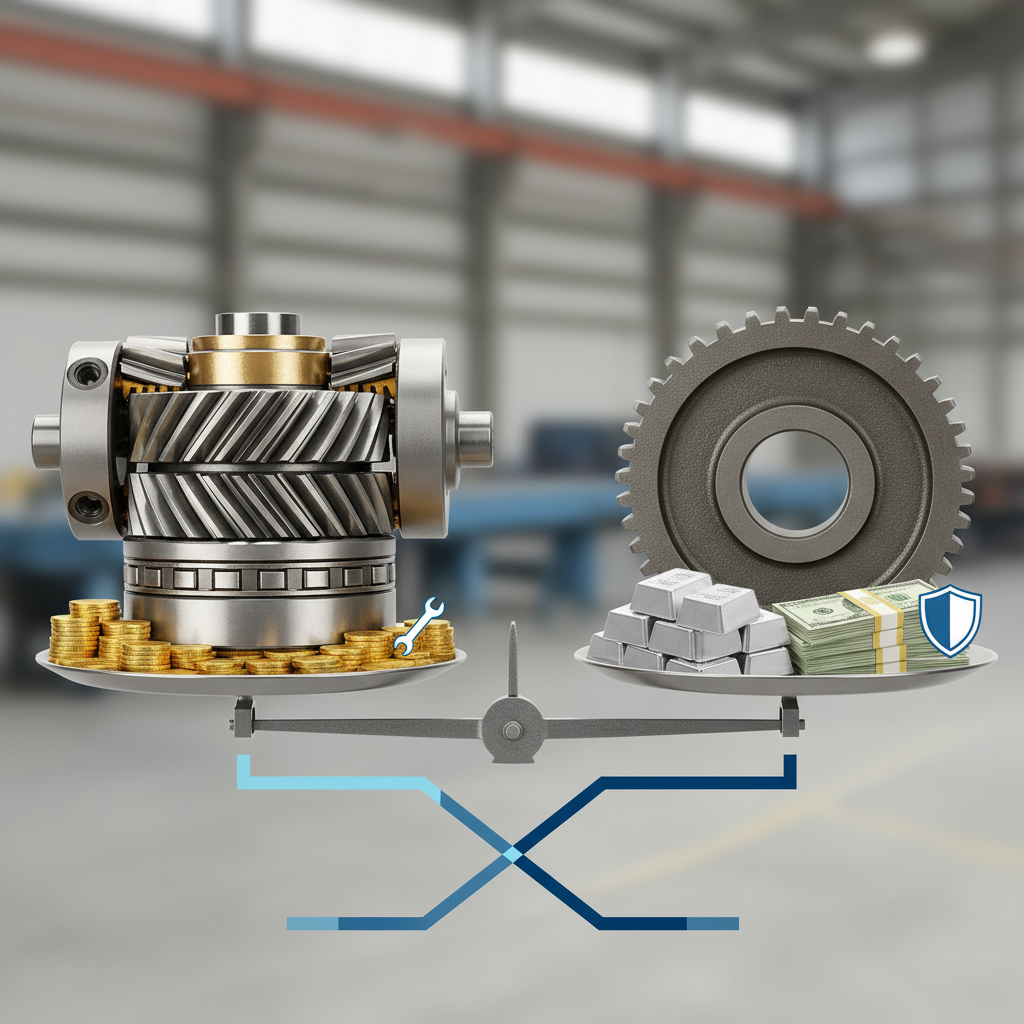
In the procurement office, the bottom line often dominates the decision-making process. Spur gears are simpler to manufacture; they can be cut with standard hobbing processes without complex setups, making them cheaper. So, what is the catch? The financial advantages of helical gear over spur gear appear in the Total Cost of Ownership (TCO), not the sticker price.
If you choose a cheaper Spur Gear for a high-load application, you may face replacing it three times in the lifecycle of a single helical set. Furthermore, the vibration from the spur gear may damage expensive motor bearings.
Economic Analysis
Cheap parts often result in expensive downtime.
- Upfront cost vs. long-term value.
- Manufacturing complexity adds ~30% cost.
- Downtime risks are significantly lower.
Key Takeaways: ROI
Invest in helical gears for critical assets; use spur gears for non-critical, slow movers.
| Cost Category | Spur Gear | Helical Gear |
|---|---|---|
| Manufacturing | Low ($) | Moderate ($$) |
| Bearings | Low ($) | Moderate ($$) |
| Maintenance | High (Wear) | Low (Stable) |
| Downtime Risk | Moderate | Low |
The premium paid for helical gearing pays dividends in reliability and reduced maintenance intervals.
9. How Does Maintenance Differ Considering the Advantages of Helical Gear Over Spur Gear?
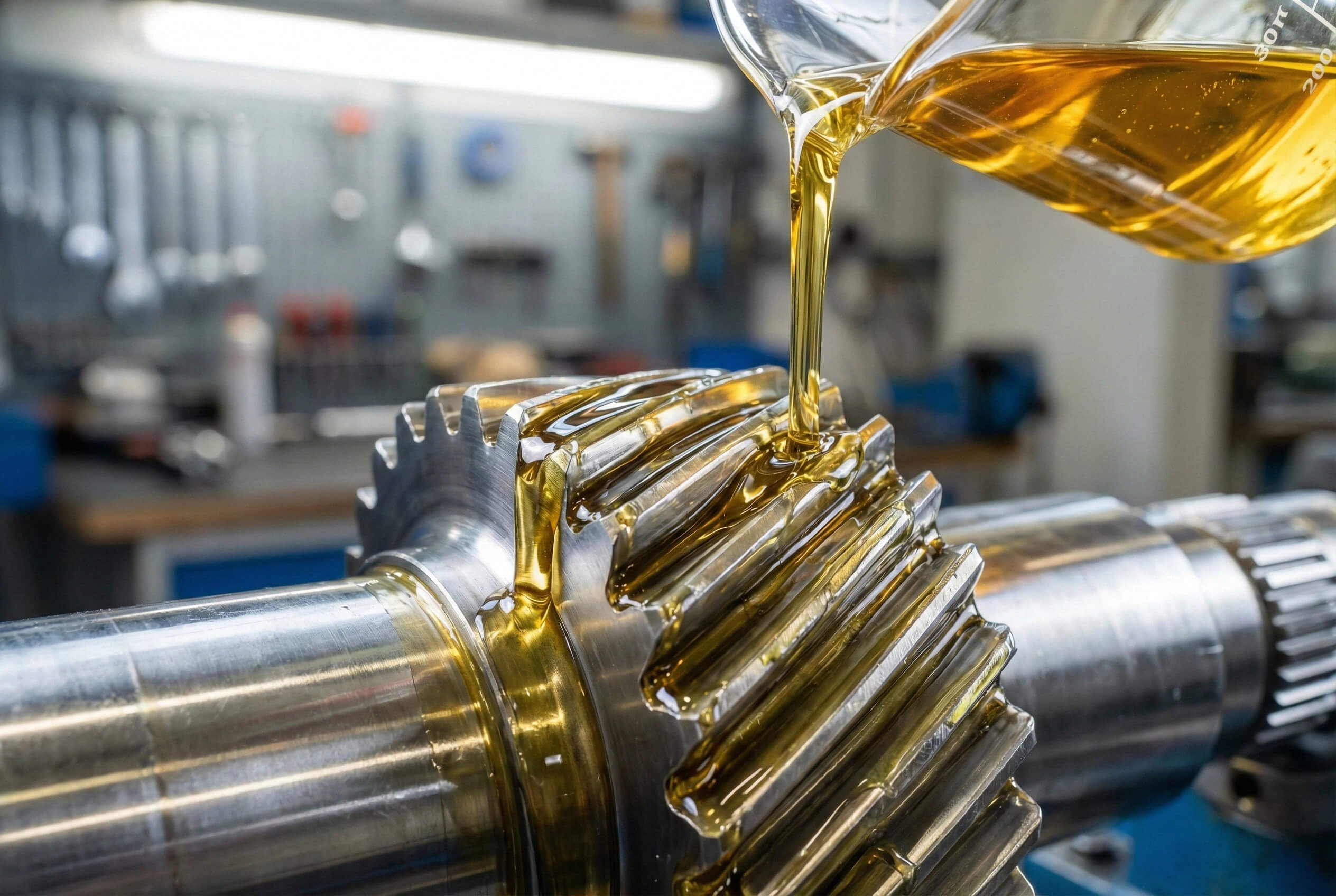
Maintenance teams often prefer components that are “install and forget,” but every mechanical system requires care. While no system is truly maintenance-free, the operational advantages of helical gear over spur gear include a more forgiving service cycle regarding tooth wear, provided the oil is good. Ready for the truth? Because helical gears rely on sliding contact, the quality of the lubricant is paramount.
Spur gears can sometimes survive in “dry” environments longer (albeit noisily), whereas helical gears generate friction heat that demands high-quality synthetic lubricants. However, if you maintain the oil, the teeth rarely need the dressing spur gears often require.
Service Protocols
Oil is the lifeblood of a helical system.
- Lubrication viscosity must handle heat.
- Thermal management is key.
- Bearing preload must be checked.
Key Takeaways: Maintenance
Helical gears demand better oil but reward you with fewer mechanical failures.
| Task | Spur Gear | Helical Gear |
|---|---|---|
| Lube Check | Standard | Critical (EP Additives) |
| Vibration | Frequent Checks | Less Frequent |
| Bearing Play | Radial Only | Axial + Radial |
| Cooling | Low Priority | Moderate Priority |
Proper lubrication transforms the sliding friction of helical gears into a hydrodynamic advantage.
10. Can Custom Profiles Enhance the Advantages of Helical Gear Over Spur Gear?
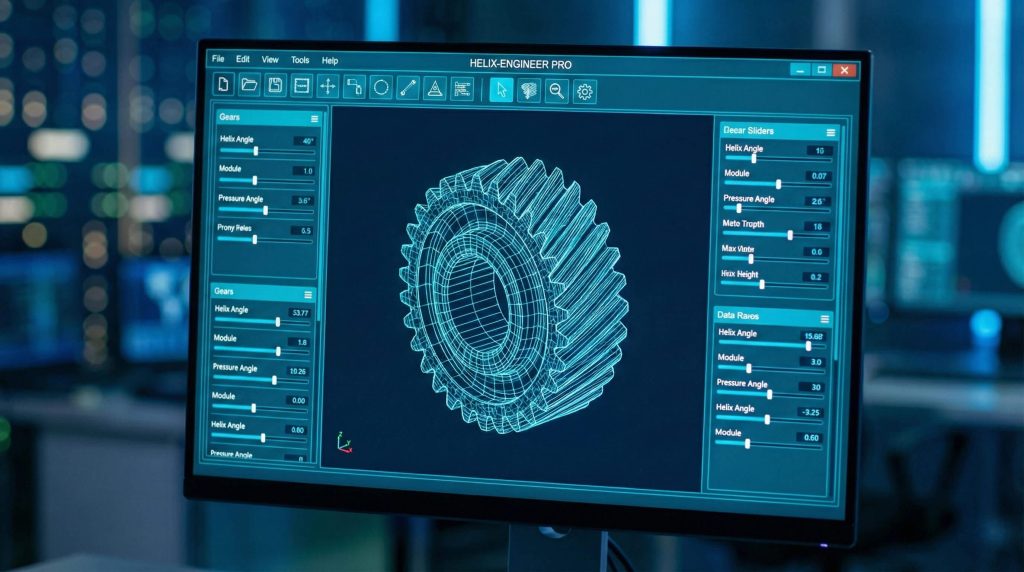
Standard off-the-shelf gears are sufficient for general repairs, but OEM manufacturers gain a competitive edge through customization. Here is the deal. The design advantages of helical gear over spur gear can be amplified by tweaking the helix angle to suit your specific chassis.
For example, we might use a shallow angle to gain strength without overloading bearings, or a steep angle for silence. This tunability is why you should contact us today to optimize your drive train. A straight line is just a straight line, but a helix is an infinite variable of design freedom.
Design Freedom
Custom angles solve specific engineering headaches.
- Angle optimization balances thrust and noise.
- Material selection enhances sliding wear.
- Profile shifting prevents undercutting.
Key Takeaways: Customization
Custom helical profiles allow you to engineer the perfect balance of noise, strength, and thrust.
| Variable | Effect on Performance |
|---|---|
| Helix Angle | Higher = Smoother/Quieter, but more thrust. |
| Pressure Angle | Higher = Stronger tooth, slightly more noise. |
| Material | Case-hardened steel maximizes sliding life. |
Customizing the helix angle turns a generic transmission into a purpose-built high-performance drive.
Conclusion
We have explored the mechanics, acoustics, and economics of gear selection. While spur gears offer simplicity and high efficiency for low-speed applications, they cannot match the smooth, quiet, and high-load capabilities of helical gears. The initial cost and thrust bearing requirements of helical systems are investments in longevity and operational stability.
As industries move toward higher speeds and stricter noise regulations, the helical profile is the standard for modern transmission. Don’t let gearbox vibration limit your production capacity. Whether you need standard replacements or custom-engineered profiles, contact us today at Gear Aide (Yantong Tech) to discuss your transmission requirements with our engineering team.
FAQ
Q1: What is the main operational advantage of helical gears in transmission systems?
The primary advantage is smoothness and vibration reduction. Because helical teeth engage gradually rather than impacting simultaneously like spur gears, they operate significantly quieter and transmit power more smoothly, which allows for higher speed and load capabilities without dynamic instability.
Q2: How does the manufacturing cost differ between these gear types?
Helical gears are generally 30-40% more expensive to manufacture than spur gears. The angled teeth require more complex setup on 4-axis machining equipment and longer machining times compared to simple spur hobbing, but the investment reduces long-term maintenance costs.
Q3: Why do helical gears require thrust bearings?
The helix angle of the teeth creates a force component that pushes the gear along the shaft axis, known as axial thrust. Unlike spur gears which only generate radial loads, this axial force must be contained by specialized thrust bearings (like tapered rollers) to prevent the gear from shifting position.
Q4: Can I replace spur gears with helical gears in an existing gearbox?
Not directly in most cases. While you might fit the gear physically, the housing and shafts must be designed to handle the axial thrust that helical gears generate; if the original gearbox uses simple radial bearings intended for spur gears, they will likely fail under the side-load.
Q5: At what speeds should I consider switching from spur to helical gears?
You should consider switching when pitch line velocity exceeds 20-25 meters per second, or roughly 3000 RPM. Above these speeds, spur gears generate excessive noise and vibration that can damage the system, whereas helical gears remain stable and quiet.